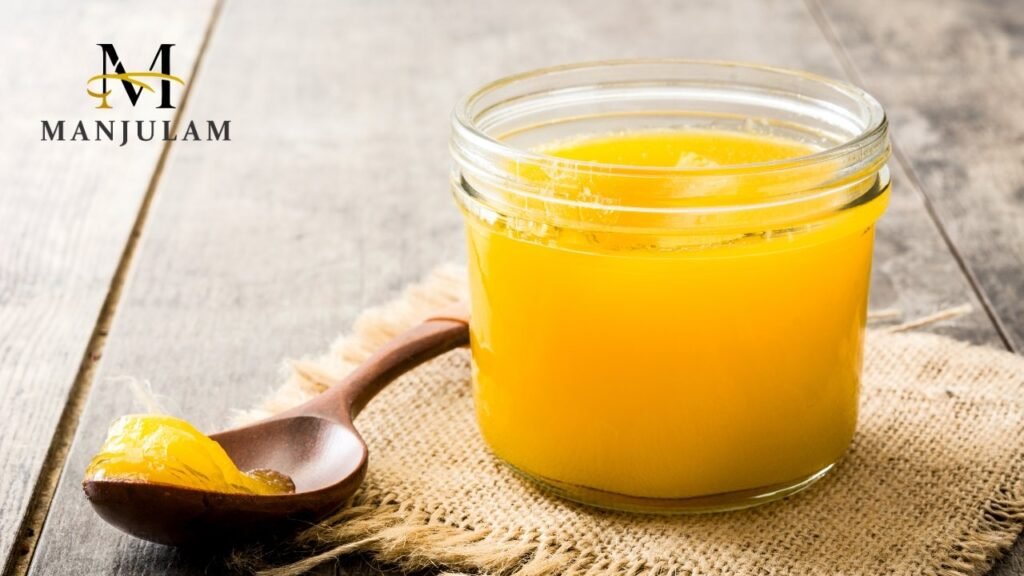
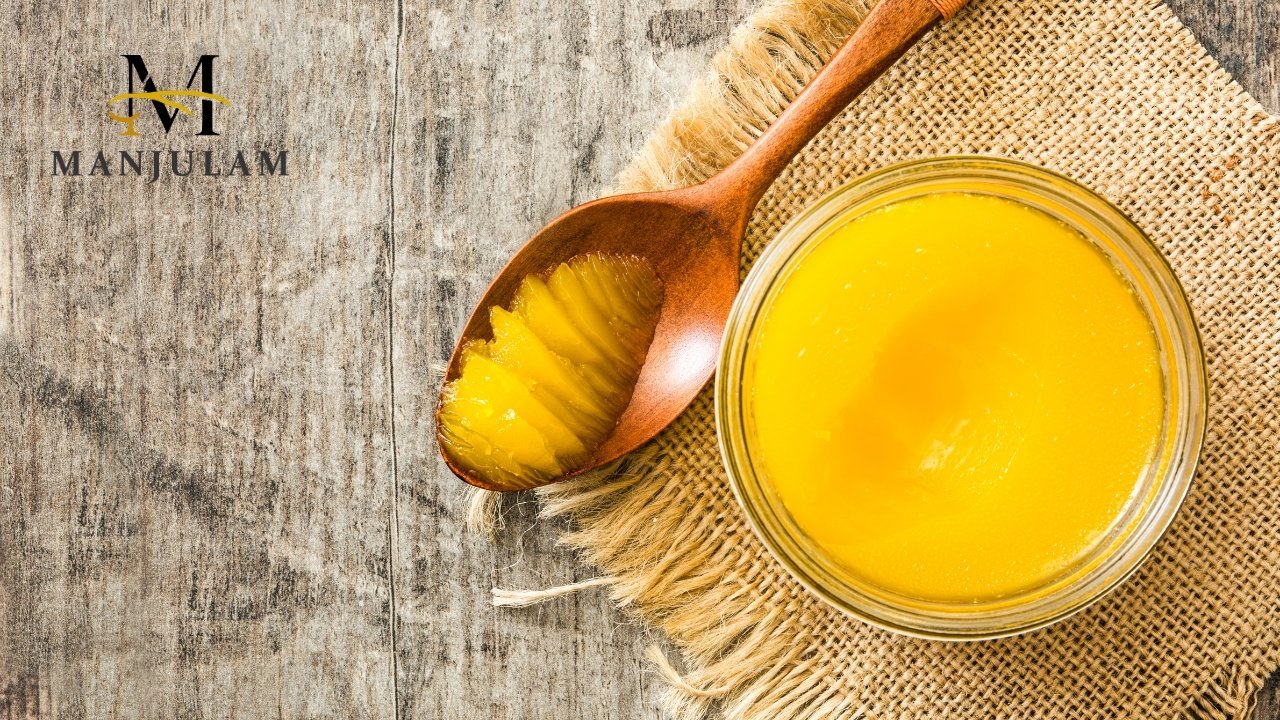
Bilona Ghee is a traditional Indian dairy product prepared through a time-honoured process that involves converting milk into curd, churning the curd to obtain butter, and then heating the butter to produce clarified ghee. Ghee has been an important part of Indian cooking and food culture for centuries, and modern research continues to examine how its milk source and processing methods influence its flavour, composition, and characteristics.
What Is Bilona Ghee?
Bilona Ghee refers to ghee prepared through the traditional curd-to-butter method rather than directly separating cream and converting it into ghee. In the traditional process, milk is first cultured into curd. The curd is then churned to separate butter, and the collected butter is heated until the water and non-fat components are removed, leaving clarified butterfat.
This traditional approach is closely associated with Indian dairy practices and Ayurveda. For people looking for Traditional Cow Ghee, the Bilona process represents an age-old method of preparing ghee while maintaining its characteristic aroma and flavour.
How Is Traditional Bilona Ghee Made?
The preparation of Traditional Bilona Ghee generally follows several important stages. First, fresh milk is converted into curd through fermentation. The curd is then churned to separate butter from the liquid portion. This butter is collected and heated gently until the moisture evaporates and the remaining milk solids separate from the fat.
The clarified fat is then filtered and cooled to obtain ghee. This traditional Bilona Method is valued for its distinctive preparation process. Heating is an important part of ghee production because it removes moisture and contributes to the characteristic flavour and aroma associated with ghee.
For consumers interested in How Bilona Ghee Is Made, understanding each stage helps explain why traditional Bilona ghee is different from ghee prepared through other commercial processes.
Why Is Bilona Ghee Different?
One of the biggest differences between Bilona Ghee and other forms of ghee is the traditional processing route. Ghee can be produced using several methods, including direct cream methods and butter-based methods. Traditional curd-butter processing may produce a different flavour profile because fermentation and subsequent heating influence the volatile compounds present in the finished product.
Many consumers searching for Pure Cow Ghee choose traditional preparation because they appreciate its traditional character, aroma, texture, and culinary versatility. However, it is important to distinguish traditional preparation from proven health outcomes. A traditional process can contribute to sensory and cultural qualities, but claims that Bilona ghee is automatically superior for every health purpose require stronger human clinical evidence.
A2 Cow Milk and Bilona Ghee
A2 Cow Ghee is often marketed as ghee made from milk containing the A2 beta-casein variant. When shopping for A2 Bilona Ghee, consumers should look beyond marketing terminology and check the product label, source information, food-safety details, and testing or certification information where available.
For people specifically searching for A2 Desi Cow Ghee, it is useful to check whether the manufacturer provides clear information about the milk source and production process. Milk source can influence the characteristics of ghee, while breed and processing can also contribute to differences in composition and flavour.
Nutritional Profile of Ghee
Ghee is primarily a dairy fat. It contains very little moisture and includes fat-soluble vitamins and other minor components. Cow Milk Ghee is commonly used as a cooking fat in Indian cuisine and can be included in a balanced diet according to individual dietary needs.
Because ghee is calorie-dense and high in saturated fat, portion size remains important. Organic Cow Ghee or traditionally prepared ghee should not automatically be considered a substitute for a varied diet or a treatment for health conditions. Modern research on the potential functional effects of ghee is still developing, and evidence for many popular health claims remains limited.
Benefits of Using Bilona Ghee in Cooking
The main practical advantage of Bilona Cow Ghee is its versatility in the kitchen. Ghee can be used for sauteing, frying, roasting, tempering, and finishing dishes. It is commonly used with dal, rice, khichdi, roti, paratha, vegetables, and Indian sweets.
People searching for Bilona Ghee Benefits often appreciate its traditional taste and aroma, along with its ability to add richness to everyday meals. Ghee also contributes characteristic aroma and flavour to food, making it a popular ingredient in traditional Indian cooking.
Traditional Uses of Ghee in Indian Cuisine
Desi Cow Ghee has a long culinary history in India. It is commonly used in traditional sweets such as ladoo and halwa, as well as in everyday dishes such as dal, rice and chapati. It can also be used as a cooking fat or added to prepared food as a finishing ingredient.
There are many Bilona Ghee Uses in Indian cooking. It can be added to hot rice, dal, khichdi, roti, paratha, vegetables, homemade sweets, and other traditional dishes. Its characteristic aroma and flavour make it a versatile kitchen ingredient.
Its relatively low moisture content also contributes to its storage stability compared with butter, although proper storage and protection from moisture, heat, light, and contamination remain important.
How to Choose the Best Bilona Ghee
When buying Best Bilona Ghee, consider more than the word Bilona on the label. Look for clear information about the milk source, manufacturing process, ingredients, packaging, batch details, and applicable food-safety or quality certifications.
If you specifically want A2 Desi Cow Ghee, check whether the brand provides credible information supporting its A2 claim. A transparent manufacturer should clearly communicate what the product contains and how it is produced.
Consumers looking for Pure Desi Ghee can also compare ingredients, production information, packaging, aroma, texture, colour, and storage instructions before making a purchase. A good ghee should have the characteristic aroma and flavour expected from properly prepared clarified butter.
Bilona Ghee vs Regular Ghee
The key difference between Bilona Ghee vs Regular Ghee is generally the production process. Bilona-style ghee traditionally starts with curd and involves churning to obtain butter before clarification. Other commercial ghee may be produced through creamery or direct-cream processes.
Neither method alone proves that one product is universally healthier. Traditional processing can influence flavour and other characteristics, while the milk source can also influence the final product.
For consumers comparing Natural Cow Ghee with other varieties, it is useful to consider the complete product information rather than relying on a single marketing claim. The milk source, processing method, ingredients, quality standards, and brand transparency are all relevant factors.
Frequently Asked Questions
Is Bilona Ghee healthier than regular ghee?
There is not enough evidence to say that every Bilona ghee is automatically healthier than every other ghee. Traditional processing can influence flavour and certain characteristics, but overall nutrition depends on the milk source, composition, processing, and serving quantity.
What is the Bilona method?
The Bilona method traditionally involves converting milk into curd, churning the curd to obtain butter, and heating the butter to produce clarified ghee.
Is Bilona Ghee suitable for daily cooking?
Ghee can be used in everyday cooking, including tempering, sauteing, frying, and finishing dishes. Because it is calorie-dense and high in fat, moderation and overall dietary balance are important.
What is A2 Bilona Ghee?
A2 Bilona Ghee generally refers to ghee made from milk marketed as containing the A2 beta-casein variant and produced using the traditional Bilona-style process. Consumers should check the manufacturer’s product and testing information for specific claims.
Can Bilona Ghee be used for Indian sweets?
Yes. Ghee is traditionally used in many Indian sweets, including ladoo, halwa, and other preparations, where it contributes richness, aroma, and texture.
How should Bilona Ghee be stored?
Keep ghee in a clean, dry, tightly closed container and follow the storage instructions provided on the product label. Avoid introducing moisture or contaminants into the jar.
Does the Bilona method change the flavour of ghee?
Processing can influence the volatile compounds responsible for aroma and flavour. Traditional preparation may contribute to the distinctive sensory characteristics associated with Bilona ghee.
Is Bilona Ghee suitable for everyone?
Ghee is a dairy-derived fat and is calorie-dense. Individual dietary needs vary, so people with specific medical or nutritional concerns should follow advice from a qualified healthcare professional.